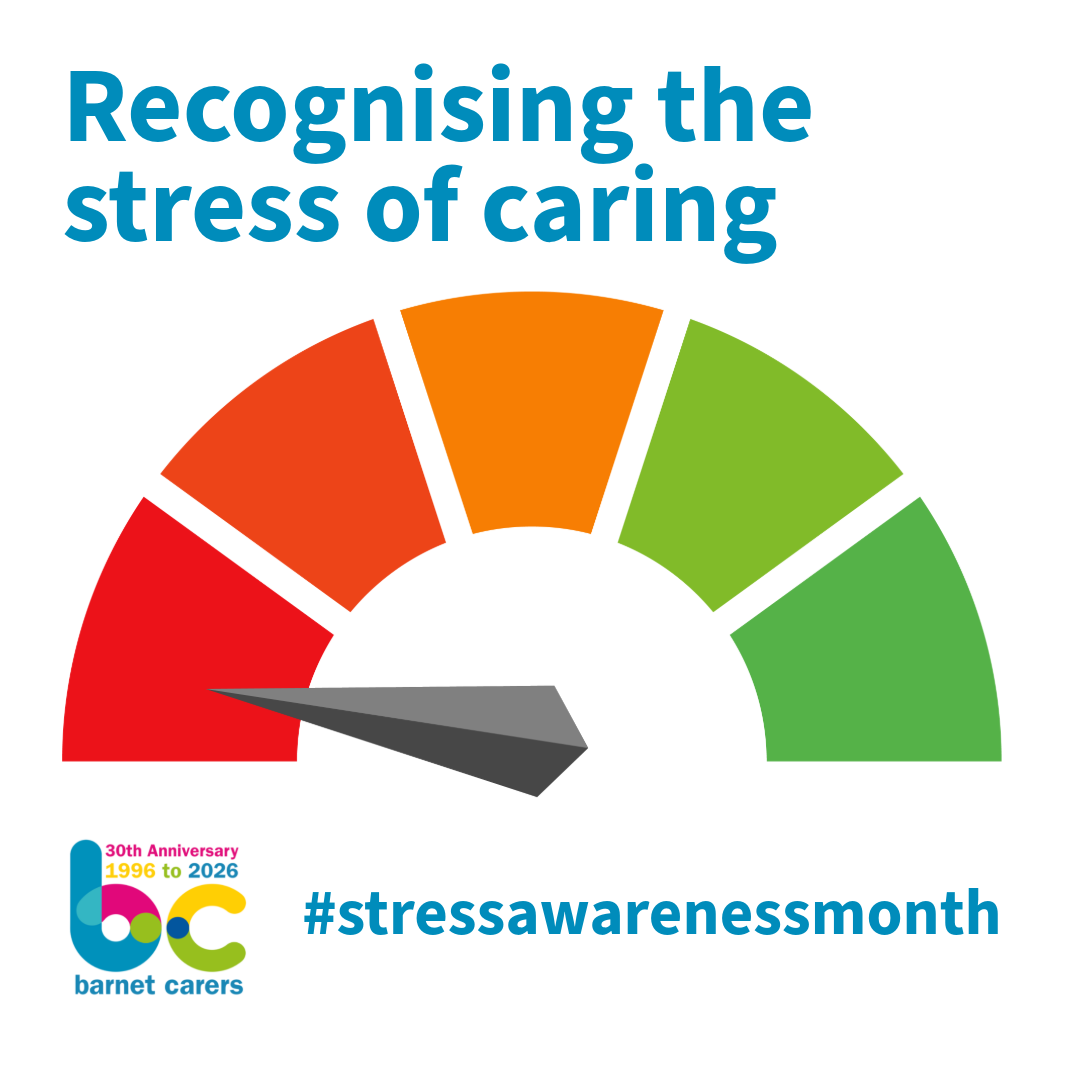
April is Stress Awareness Month, a chance to all of us to think about how stress affects our lives. For unpaid carers, stress is often not an occasional problem but a constant background pressure—a part of everyday responsibilities, routines and worries. Caring can be deeply meaningful, but it can also be exhausting, isolating and overwhelming and the cause of substantial stress.
Why stress is such a big issue for carers
Many carers support a loved one while also juggling work, family responsibilities, finances and their own health needs. Often, caring starts gradually or in a crisis, leaving little time to adjust. Over time, this sustained pressure can build into chronic stress.
Research by Carers UK and Carers Trust shows that many carers experience anxiety, low mood and physical health problems linked to caring. Large numbers report neglecting their own health, cancelling appointments, or feeling unable to take a proper break. Stress may show up as fatigue, sleep problems, irritability, difficulty concentrating, headaches, or a sense of being constantly “on edge”.
What makes carer stress particularly hard is that it can feel invisible. Carers may feel they have to cope, keep going, or put everyone else first. Guilt about taking a break or asking for help is common. Yet unmanaged stress doesn’t just affect carers’ wellbeing—it can also impact relationships and the ability to keep caring in the long term.
Recognising the signs of stress
Stress does not always announce itself loudly. It often creeps in slowly. You might notice:
- Feeling constantly tired, even after rest
- Poor sleep or racing thoughts at night
- Feeling tearful, irritable or overwhelmed
- Physical symptoms such as tension, aches or headaches
- Losing interest in things you once enjoyed
- Feeling isolated or cutting yourself off from others
Recognising stress is not a failure—it’s the first step towards protecting yourself.
Practical, realistic ways carers can manage stress
There is no single solution to stress, and no one “right” way to cope. What helps will vary from person to person. The aim is not to remove stress altogether, but to make it more manageable.
1. Start small with self‑care
Self‑care does not have to mean long breaks or lifestyle overhauls. Even 5–10 minutes a day can help—sitting quietly with a cup of tea, stepping outside for fresh air, gentle stretching, or listening to music. Small pauses help your nervous system reset.
2. Let go of guilt around rest
Rest is not a reward; it is essential. Taking a break—whether through asking someone to sit with the person you care for, using respite support, or simply saying no to something non‑essential—helps you sustain your caring role.
3. Talk to someone who understands
Keeping worries bottled up increases stress. Talking to a friend, relative, support worker or another carer can make a huge difference. Many carers find reassurance in realising they are not alone in how they feel.
4. Look after the basics
Sleep, food, movement and hydration all affect how resilient we feel. These can slip easily when caring is intense. Focus on what is possible, not perfection—even small improvements matter.
5. Seek support early
If stress feels unmanageable, or you are experiencing low mood or anxiety that is not improving, speak to your GP or a health professional. Getting help early is a strength, not a weakness.
Useful support and resources
You do not have to navigate stress alone. The following organisations offer trusted, carer‑friendly information and support:
-
Carers UK – practical advice on stress, mental health and carers’ rights, plus an online carers forum
👉 www.carersuk.org -
Carers Trust – information, local support and carers’ services across the UK
👉 www.carers.org -
Mind – guidance on managing stress and anxiety, including self‑help tools
👉 www.mind.org.uk -
The Stress Management Society – Stress Awareness Month resources and gentle wellbeing tools
👉 www.stress.org.uk -
NHS – advice on stress and accessing mental health support
👉 www.nhs.uk
If you are supported by a local carers service, they may also offer wellbeing activities, peer support, counselling or short breaks.
Our friend and carers advocate Matthew McKenzie has produced a video and blog looking further at stress and carers. You can see that here:
Stress Awareness Month 2026 – Tips for Unpaid Carers | A Caring Mind